The Death of Hypocrisy

There are many casualties of the recently deposed Trump administration that have, to date, gone unaddressed, and many more than have gone unrecognized.  No matter which side of the proverbial “aisle” you sit on, there are few who disagree that the past four years mark a material shift in American society. While there are obvious and terrible changes, like the loss of civility in discourse, the tribalism of modern politics and the systemic devaluation of academic expertise, those feel like problems with obvious, albeit difficult, solutions.  The more subtle losses betray more challenging repairs, because we simply haven’t had to remediate some social axioms which we took for granted. The best example I have been able to think of is the death of hypocrisy, what it means and how, if at all, we might make our way back.

There are many casualties of the recently deposed Trump administration that have, to date, gone unaddressed, and many more than have gone unrecognized…

The best example I have been able to think of is the death of hypocrisy, what it means and how, if at all, we might make our way back.

Merriam-Webster defines hypocrisy as:

a feigning to be what one is not or to believe what one does not : behavior that contradicts what one claims to believe or feel

especially : the false assumption of an appearance of virtue or religion

Merriam Webster Dictionary

Combining these concepts provides a valuable way to identify this critical fallacy in human thinking: i.e. hypocrisy is when someone does something that contradicts their claims to virtue or religion.  (For the record, I am vehemently opposed to the underlying assumption in this definition – that virtue and religion are synonymous, but that’s a different essay for a different time.)

Modern “identity” politics demands a claim to superior virtue – as you can’t vilify someone without indicting their values – but similarly fails to hold the (claimed) virtuous to any account. Now, when faced with the demonstrable opposition of one’s words with their actions, distraction, denial and disbelief have replaced humility, learning and personal growth. Rather than face the difficult truth of being inconsistent, it has become the fashion to simply imagine a “different” reality, where there is no inconsistency, and spending that same energy on immersing one’s self in those now infamous “alternative facts.” In other words, there can be no inconsistency where you can constantly reimagine your reality based on how you’re feeling.  But, what sort of “reality” does that leave us with?

Consistency and accountability are crucial components to what we believe makes a person. We identify one another by those lines we can connect through what we know of their lives – the constant themes, the consistent actions, the identifiable thesis in the lives they’ve lived, that provide context and direction to those lives. While we are capable of allowing others to “reinvent” themselves, after major life events, or as a major course correction after an intervention or other realization that things have gotten way off track; we usually don’t permit such wholesale personal revisions as a matter of ordinary course. We simply don’t have time or space to accommodate people who constantly demand new accommodations for who they are or want to be.  We are far more likely, as Maya Angelou sagely advised us, when: “someone shows [us] who they are, [to] believe them the first time.”

But to really figure out how to save it, we must understand how hypocrisy died. And although I would deeply love to hang this catastrophic social shift around the orange neck of the disgraced President, it was not Donald Trump who killed hypocrisy, it was us.  Hypocrisy was an educational tool that we gleefully weaponized, and as a result we lost it through disarmament – because we should have. You can’t hope to help people with the same tools you hurt them with, and because of the extraordinary lack of grace on the part of academics, we don’t have access to the educational tools we need the most.  But we can.

Consistency is the antidote to hypocrisy, and as a value (versus a cudgel), it’s something we first build within ourselves and then require of others who know and care for us.  It’s an essential bridge to greater trust in our relationships – allowing others to trust what we’ll do, even when they aren’t around to keep an eye on us. I’m confident the parents among us know this, well.  If we start with committing to our own consistency, and holding ourselves truly to account, we will naturally require it of our existing relationships and similarly attract like-minded individuals who are seeking the same for themselves. Eventually, it becomes an unavoidable social requirement (not unlike wearing pants in polite company) that can once again serve to quietly police our behavior, requiring consistency as a prerequisite to legitimacy. 

* * *

It’s a funny thing that happens when you go searching for someone to blame or punish for social change – you often find the most culpable person in the mirror.  The death of hypocrisy is just such a case. It is easy to blame the ignorant for a lack of education – but that doesn’t make it any more correct. Responsibility for education falls to the educated, and nowhere else. There are two kinds of people who run ahead of the pack: those who pull the ladder up behind them, and those who ensure it’s still good for the next people coming up. If we imagine ourselves the virtuous of these two, we must face the hard truth that we killed hypocrisy. Fortunately, that admission comes with the reciprocal realization that we are also in the best place to save it – if we have the stomach to only use it one last time as a weapon: to kill the last of it in ourselves, before we beat it into the educational plowshare we truly need.   
The Bonfire of the Divinities

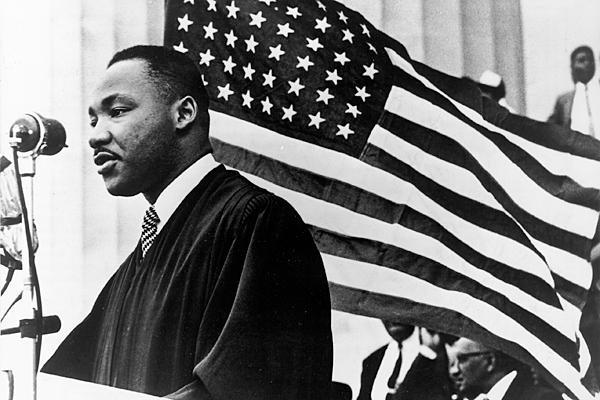
martin-luther-king-photoAs Alexander Pope originally opined in 1711, “to err is human; to forgive, divine.”  Of course, I am keenly aware of the irony of publicly-declared Atheist aspiring to (or even referring to) divinity but indulge me a moment longer if you will (NOTE: For those that won’t, feel free to check out Pope’s epic work: An Essay on Criticism, he’s far more erudite than I am).  Nevertheless, Pope’s reference to divinity is arguably secular – inasmuch as it provides an aspirational moral position rather than suborning the supernatural, one where an individual’s humanity might be (momentarily) transcended by forgiving the errors implicit in the human condition.  Further, it is hard to find anyone who opposes the moral value of, or even imagine a higher ideal to aspire to than, forgiveness.  Who of us hasn’t marveled when the loved ones of a victim of violent crime publicly state that they forgive the perpetrator?  What’s more, who hasn’t felt the waves of benevolence and peace when forgiving what you previously thought to be unforgivable?

Unfortunately, forgiveness has fallen into modern disfavor.  The storied moral high ground once exclusively occupied by absolution now accommodates an imagined moral “consistency” instead.  The greatest ideal to which thought leaders now aspire is to have lived consistently with the same set of convictions that you have now since time immemorial (or at least since the age of reason); with absolutely no inconsistent statements or actions in your past – no matter how distant. I submit to you, that this is insane.

The greatest human aspiration has been, is, and always should be to grow.  If we’re lucky, we’ll get eight decades or so on this beautiful rock.  That’s it.  No matter what you believe happens after, you know that you’re not going to get another go as you.  What makes us human is our big, beautiful brains – and the abilities they give us, to learn, to adapt, to improve.  We improve on all different scales: from day-to-day, year-to-year, generation-to-generation and so on.  Of course, this improvement is not as consistent as it may appear in hindsight. Our progress often requires that we take a step back in order to take a step forward.  In some cases, we go charging back so forcefully that it appears we might be changing directions, altogether.  But a little perspective always demonstrates the implicit truth of President Obama’s favorite Martin Luther King Jr. quote – especially important today: “The arc of the moral universe is long, but it bends toward justice.”

The most common criticism of that sentiment is an important caveat – that these things do not happen by magic.  We must work to grow, and that can start with the work required to forgive.  I was moved, most recently, by the recent story regarding Kevin Hart, and more locally by the candidacy of Congressman Ruben Kihuen for Las Vegas City Council.  For those that don’t know, about ten years ago (circa 2010), well-known comedian, Kevin Hart, regularly posted (via Twitter and other social media) grossly homophobic sentiments as humor.  He doesn’t tell those jokes anymore, because he shouldn’t, they’re not funny, and from what I can tell, he’s grown.  Further, he’s apologized, but none of that was enough for the Internet. Within 48 hours of the hosting announcement, he stepped down from his hosting duties rather than bow to ongoing pressure to continue to apologize.  Congressman Kihuen was the subject of sexual harassment allegations from multiple women, amidst a flurry of similar allegations made against dozens of elected officials prompting investigations, resignations and a party-wide reckoning (at least for one of the major political parties).  He almost immediately apologized, denied the most serious allegations, announced he wouldn’t seek re-election and the “mob” moved on – having obtained the proverbial “scalp” they sought.  Despite the fact that Ruben was at the time (and still is) a single man, and his public soul-searching, he was “branded,” thrown in with the lot of rapists and sexual aggressors and the balance of his public service career left for dead.

To be clear, I am wholeheartedly in support of the #MeToo movement and their previously unthinkable takedowns of Bill Cosby, Harvey Weinstein, Matt Lauer, Bill O’Reilly and more.  It was long overdue and just in its goals and its gains.  But like anything else, too much of a good thing can quickly turn not-so-good.  Public figures, while largely “owned” by the public, are not similarly obligated to each member of that public.  Everyone is not entitled to an apology – no matter how rightfully offended they might be. Mistakes in judgment, no matter how egregious they might seem in the harsh light of hindsight, cannot obligate someone to endless shame and atonement – especially at the bequest of “victims” whose connection to the wrongful conduct consists exclusively of following via social media.  This does not minimize the very real impact that may be visited upon these individuals – but it does minimize the culpability of the accused. Put simply, just because Kevin Hart and Congressman Kihuen did something bad, doesn’t mean they did it to you just because you’re impacted by it.

More importantly, if we are not willing to forgive these past sins and let these individuals grow, then the proverbial “sentence” for any crime of moral turpitude is necessarily death.  I know that sounds extreme.  It should.  But, if we refuse to let people rise above the aggregate of their past sins, then aren’t we essentially condemning them?  This modern condemnation is made possible by nearly unlimited and wildly inexpensive digital storage, combined with our seemingly endless appetite for self-indulgence – which has resulted in the vast majority of us voluntarily publicizing most of our previously private lives.  It’s hard to find a more universally beloved human pastime than passing judgment on the lives of others, and in our relentless pursuit of convenience, we’ve even outsourced this banality – content to let others pass judgment for us, so we can enjoy all the prurient schadenfreude, with none of the associated guilt.  Unfortunately, this commoditized version must satiate the greatest number to survive, and as a result, quickly becomes indiscriminate and destructive. There is simply always someone to be offended – no matter how benign your activity or your associated intent. In reality, there are no perfect people – and the fact that we have come to expect such perfection as the standard for those looking to come back from mistakes – is as disturbing as it is disappointing.

So, what is the relevant standard?  For me, it’s a matter of genuine contrition.  While this can be evident in words, it is most effectively communicated in deeds, and most commonly evidenced by time.  To be clear, the simple passage of time does little to mitigate past sins. Just because they loom less large or that my personal concern has diminished in the face of other things to be concerned and/or outraged about, doesn’t mean they are forgiven.  But when combined with public apology, reasonable explanation/accountability and the passage of time without incident – or even more importantly – with remedial action, education and/or growth – there appears to be more than adequate opportunity to forgive.  After all, if we expect an opportunity to grow and move beyond our own past transgressions, how can we hold others to a different standard?  To do so is the apex of hypocrisy – and something we ought to avoid by any means.

Forgiveness isn’t easy.  It shouldn’t be.  Our long and contextual memory is the source of much, if not all, of our humanity.  It allows us to understand this world like no other living creature(s).  But with this great power comes the responsibility to learn how to use it for the greatest good.  It’s fine to never forget – but as associated failure to ever forgive is an abuse of this extraordinary capacity.  I remain a fan of Kevin Hart, and I hope he will get the chance to host the Oscars, or other important awards show.  Of course, there’s no way for me to know what’s in his heart, but after nearly three years of exposure to actual bigots – I feel like I’ve got a pretty good sense of who’s just going through the proverbial motions.  What’s more, I’m supporting Ruben Kihuen for Las Vegas City Council.  Having had the opportunity to sit and speak with him, personally, and at great length, I’m quite convinced that he learned from what happened to him, and that he’ll treat his second chance with even greater conviction and resolve than he did his first.  I’ve made mistakes of my own, most of them private but many of them quite public.  For those who have forgiven me and given me the opportunity to remake and rebuild myself, I am eternally indebted and grateful.  And for those who haven’t, I remember who they are, too – they constitute my mental mailing list for the notice of each accomplishment since they left me for dead.

Of course, as an Atheist, I don’t believe in a judgement day, where my life is comprehensively called to account, and if the balance is more “good” than “evil,” then I will be granted heaven over hell.  But I do believe in morality, accountability and the words of the man whose life we celebrate today when he said: “Darkness cannot drive out darkness; only light can do that. Hate cannot drive out hate; only love can do that.”  For there is no greater love than to forgive, and no greater divinity available to us than that.

Just Move

moveOne of my best and oldest friends, also a Naval Academy alumnus, has a way of shouting the word “MOVE!” in the kind of way that only military personnel do, that all at once surprises, terrifies and, as luck would have it, moves you.  He’s so good at it, in fact, that I often try to imitate it – if for no other reason than to get him to correct me with the real thing.  As much as I enjoy the visceral sensation and memories it engenders, it is also a reminder of the most important lesson I learned in my ten years of military service: to move.  As children of the Information Age, we have access to more information, more quickly than at any point in human history.  As I’m want to say, the vast majority of Americans walk around with a pocket-sized computer that gives us access the collected works of humanity, on command, for pennies a day.  Of course, most of us use it to publish flattering photos of ourselves and self-indulgent commentary on the everyday banality of our lives, but that’s a topic for a different day.  Nevertheless, in our better moments, we can access almost any/all of the world’s knowledge – which is a tempting way to delay nearly any decision.  After all, with more information, we could make less mistakes and better decisions, and shouldn’t we do that?  In a word, no.

There are a great many lessons that one can take from life aboard a ballistic missile submarine and apply to real life, but few are as important as the first rule of submarine tactics: it’s better to move in the wrong direction than not to move at all.  For submariners, this isn’t philosophy, it’s physics.  You see, it takes more time and energy to get the boat moving than it does to turn it completely around.  In other words, it’s better to go in any direction, including the completely wrong direction than it is to just sit there.  Keep in mind that this is the rule when the stakes are about as high as they can go.  U.S. Navy Ohio-Class Ballistic Missile Submarines carry enough destructive power to eliminate a small nation from existence, and their survival and value are predicated primarily on their ability to remain undetected.  These vessels are not nearly as quick or maneuverable as their “hunter killer” counterparts, including the version sailed by the few foreign navies that operate submarines.  They have reasonable defense capabilities, but they aren’t going to “outrun” much of anything serious.  So, tactical mistakes aren’t just potentially deadly for the crew, but for all of us.  Nevertheless, we are all taught the same first rule: move.

Of course, even the slightest consideration renders this advice sensible.  Most things are more difficult to start than they are to continue.  For writers, the “fear of the blank page” is far more imposing than a mid-work “writer’s block” and any fitness enthusiast will tell you that the hardest part of any workout is getting to the gym.  There is almost certainly some cognitive explanation for this, but my knowledge of neuroscience, behavioral economics and psychology is colloquial, at best, so I’ll leave that to better minds.  What strikes me about this particular advice is the striking frequency of starting paralysis in a time where it’s never been easier, less expensive or faster to start almost anything.  Want to start a new business?  Write a book?  Compose a song?  Travel to exotic locales?  There are apps, sites and even brick and mortar storefronts to help you do all of that – even all at the same time!  But we’re starting less and less.  In 2008, for the first time since they were measured, the “birth rate” of new businesses dropped below the “death rate” for closing businesses.  College applications are down, fewer books are being written and marriage and birth rates are nearing startling lows.  So what gives?

Modern American life is lived under an extraordinary microscope.  The rise of cheap and nearly unlimited data storage has given rise to social media which has given rise to self-publication of nearly every notable detail (any many not-so-notable details) of our lives.  Of course, as we are each the heroes of our own stories, we desire to tell those stories in the most flattering light.  As the distance between what we actually experience and what we publish grows ever shorter, the pressure to editorialize our lives to perfection gives way to the far more insidious pressure to actually live a perfect life. This pressure now commonly manifests itself in the paralysis of deciding what to do.  For even the most mundane undertaking, you can find an endless stream of advice on how to do it better, cheaper, smarter, sexier, and more.  With anxiety poised to wash away the fragile confidence of starting something, a frenetic notice that you might (or are probably going to) do it wrong is often all it takes turn a strong first step in a pensive reconsideration.

Of course, these pressures are all wholly contrived.  These fears are not only stoked but manufactured to produce that same paralysis.  This painful uncertainty reliably turns doers into consumers, which is why it is so commonly inspired by marketers, tastemakers and other influencers.  The simple fact is that perfection is only an idea, something that doesn’t naturally occur – especially in the exceptional collection of cosmic probabilities that constitutes a human life.  Every mistake looms less large in the rearview mirror, while stagnation fails to age nearly so well.  In the time you take to carefully consider your first move, those who know better have already made a few wrong moves, corrected themselves, and built a lead that you’ll likely never overcome.  Now that’s something to be afraid of.  It turns out that the best way to think about what do next, is to stop thinking about it, and just do it.  Or as Jason would say: MOVE!