For five minutes, we thought we were going to end the world. I took just that long for the cold reality of the 24 intercontinental nuclear weapons we had been blithely driving around the ocean for years to set in. This world’s peace, one we had long assumed as permanent, seemed a memory we regretted not enjoying for just five minutes longer. Five minutes underwater. Five minutes in the dark. Five minutes with only our well-practiced procedures for guidance and awkward solace. Five minutes.
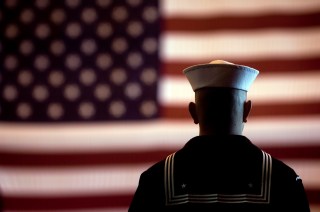 I was 27 years old, a Lieutenant on board the fleet ballistic missile submarine, USS Tennessee, and getting underway for what would be my last patrol. The promise of shore duty and/or law school loomed on the not-too-distant horizon. The end of a JO (“Junior Officer”) tour on a submarine is about as good as it gets for sub duty. By that time, you’ve learned just about everything you need to know about the boat, you’re in with just about everyone on board, and you’ve mastered the delicate art of staying out of the way of the crap that seems to endlessly rain down from above. The “JO” job actually has two parts: first, you’re a watchstander, and second, a division officer – so you spend six hours out of every 18 driving the ship around (or keeping the nuclear power plant from melting down), and in your “spare” time, you’re in charge of a whole division of sailors. But despite being the lesser of the two responsibilities, the division you lead is what really defines you onboard: the Electrical Assistant (EA) has Electrical Division, the Damage Control Assistant (DCA) has the A-Gang, the Assistant Weapons Officer (AWEPS) has the Missile Techs, and so on.
I was getting underway this time with the division that I had always wanted: Radio. Which made me the COMMO (“Communications Officer”). There were a lot of reasons I wanted the COMMO gig. First, when my dad was in the Navy, some thirty years earlier, he was a Radioman, and I think we were both secretly hoping that I’d find my way into the radio room (though we had never mentioned it). Second, one of the few things I truly enjoyed about my tour on a missile boat was the strategic communications; the complexity all of the procedures and safeguards surrounding the nuclear weapons on board. If you’ve seen Crimson Tide, you know what I’m talking about. As a mathematician, I enjoyed the puzzle-type nature of the process – all the scenarios and ways to test the rules to their edges. I had, even prior to becoming COMMO, taken to helping draft practice exercises for the wardroom, and had gotten quite crafty at it. And at long last, for this patrol, the radio room was finally mine.
But that was where my luck ended. Even on September 8, this wasn’t an ordinary patrol. The Tennessee was going to be participating in a global communications exercise (“COMEX”) just after we got underway. And my chief had wasted no time in recalling the horror stories of previous COMEX: messages at all hours of the night; countless hours sifting through traffic that wouldn’t even apply to us and visions of a harried COMMO just trying to survive it all. I chestily assured him that I’d be just fine.
We got underway without incident – and as routine as it had become in the preceding two and a half years, the rush of taking the world’s largest submarine to sea was still tangible. The pending dread of spending nearly 90 days underwater suddenly dissipated with the bustle and anxiety of getting over 18,000 tons of deep-drafting warship out into the Atlantic. Maneuvering that much metal from the docks of Kings Bay Naval Submarine Base through the intricate waterways of south Georgia and north Florida is the sort of thing which required the focused attention of every man on board. And after we’d finally gotten the boat far enough out to safely submerge it, there was always still plenty to do. But, since I knew that once that global COMEX started, sleep would be hard to come by, I was keen on getting as much rest as I could. So, I snuck off to my stateroom and slept like a baby.
Between sleep and well-practiced routine, the first 48 hours of the patrol passed quickly and uneventfully, and before I knew it I was awake and in the midst of my first global COMEX. I settled into the grind and had internally braced myself for the three day onslaught. But less than 24 hours after it started, and utterly without warning, it was canceled. My chief noted, it was the first time in his 20 plus years in radio, had ever seen a global COMEX terminated before its completion. But the surprises and firsts were just getting started.
It was September 11, 2001, and just as I was heading back to my stateroom flush with the unexpected good fortune of the cancelled exercise, the 1MC (the ship-wide announcing circuit) began to blare “Alert One, Alert One”.
By the time anyone hears about it over the 1MC, many steps have already been taken with a strategic message: its initial receipt by a radioman, its verification by a radio supervisor and the first part of it decoded to tell what kind of message it is. It’s only after all of this when the radio supervisor can call to the ship’s Control Room with the recommendation that the Officer of the Deck call away “Alert One” ship-wide. But just as the procedures for these messages are strictly controlled, so are the procedures surrounding the drills through which the crew masters them. And the two people who always know about these drills are the Captain and the COMMO. So, when I heard “Alert One” called away just as the COMEX was cancelled, I thought either the CO had picked a shitty time to run an exercise, or that my radiomen had screwed up the start time for one planned later in the week. There was, of course, another possibility, but, at that time, it didn’t even cross my mind.
The cancelled exercise had kept me up for most of the previous 24 hours, and I had only stolen an hour of two of sleep in the preceding 36. So in the middle of the ship’s “afternoon” on September 11, I was already fraying around the edges. I stormed into the Radio Room with my “What the fuck?!” face, but never got the words out of my mouth. My chief was holding a message from the teletype (not from the laser printer like an exercise message would be) that I recognized immediately to be an actual EAM (Emergency Action Message). After countless hundreds of exercise versions, there it was, the real thing. The nation’s nuclear machinery had slowly, impossibly, begun to turn, and I was staring at the first bit of it. My chief noted quietly that it was the first he’d ever seen. He needed no such assurance from me.
A submarine is an island, in the purest sense. There are no televisions, no newspapers and (normally) no commercial radio. There are no windows, there are no cell phones and certainly no 24 hour news. So, when the first Emergency Action Message that any of us had ever seen notified us simply that “a plane [had] crashed the World Trade Center” any perspective or visualization was left solely to our imaginations. Our only real reference was the 1993 World Trade Center bombing – and although that was certainly a calamity, where six had died and over a thousand had been injured – it certainly didn’t seem like the kind of thing that would warrant activating the nation’s nuclear arsenal. The few of us who did bother to guess opined that it was just a small plane, like a Cessna, that had accidentally flown into one of the iconic towers.
The shock of the first “real” message quickly wore off, as they began to come in one after another, each with a small addition to the facts, but only a couple sentences at a time. Soon, the “plane” become a “passenger aircraft” and soon after, it became a 767. Not long after that, a second plane had hit the other tower, and yet another was reported having crashed into the Pentagon. It didn’t seem real, even then, and in my mind, I still imagined small planes and few casualties. I thought of scenes on the evening news, and a few weeping widows and still wondered why they were sending this kind of news via the world’s most secure network. The U.S. military hadn’t been to below DEFCON 4 since the Bay of Pigs. Even through the entire arms race and Cold War, we had never gotten even halfway to pulling the trigger on our missiles. But a precious few minutes after the notices of the attacks came, we got word to set DEFCON 3, and things started to get very real very quickly, as the long unused but well oiled machinery of nuclear response had begun to turn in earnest.
There are a lot of things not to like about how the business of shooting nuclear missiles from submarine is handled. But the security and redundancy of the process is not one of them. The infamous launch “keys” that used to hang around the Captain’s neck (and as you may have seen in Crimson Tide) were, by that time, locked in a safe in the Missile Control Center; a safe whose combination would only come, encoded, with an execution (launch) order. Each message is decoded three times independently, once by two officers working together, once by the executive officer and once by the captain. Unless and until they all agree, no message can be acted on. Messages are authenticated with sealed code keys that are never seen by human eyes, and replaced by the National Command Authority for each patrol. The officers on board train on message procedures daily when on the boat, and weekly when off of it. It is safer and more reliable than any process I have come across, or have even heard of, since. It is designed to be mistake free, and yet to catch any and all mistakes. It is foolproof. But that’s only from the outside. On the inside, the process is intense and unforgiving, even during practices. There are disagreements, arguments and angry references to the governing documents; miscommunications, misunderstandings and sometimes, misinformation. But in the end it works. It always works.
 One of the procedural steps taken by the young radio operators who sit at the terminal “stacks” in the radio room upon receiving strategic communications is to decode the first few characters. This to let the processing officer teams know what type of message they’ll be handling – since the procedures for each are slightly different. Speed is essential to the process, and while accuracy can be assured by the processing steps, the speed at which they are performed cannot. So the small heads up given by the radio operators is invaluable as the seconds tick away.
I hadn’t left the Control Room (the “Con”) or the attached Radio Room for anything other than eating or going to the head (bathroom) since the messages had started coming. Many of them did not have to do with us, but still required the same diligent procedural attention as if they did. I wandered out to the Con, where the CO was, by then, also waiting out the message barrage. The announcing circuit from the radio room suddenly crackled to life and announced to the Con that they were in receipt of yet another valid message. This time, when they announced the code of the message, the room momentarily fell silent, it was one we all knew to be an execution order. We were launching missiles. The number seemed to hang heavily in the air, and for a moment, the bustle of the Con was replaced by a complete and terrifying silence. As they closed the announcement by recommending the Officer of the Deck call away “Alert One”, the Captain curtly ordered me to get into Radio and find out what was going on. It was as serious as I had ever seen him, his impenetrable joviality finally laid to waste by the gravity of the moment. An execution at this point was premature. We had been trained on how a nuclear attack would escalate, and knew that certain expected precursors were absent. As I bolted (or at least whatever version of “bolting” I could muster in my then-fatigued state) into Radio, the CO got on the 1MC and spoke to the crew.
“Attention Crew Members of the USS Tennessee, this is the Captain speaking. Over the past few hours we have been receiving messages which indicate that a number of planes have been flown into the World Trade Center towers, the Pentagon and rural Pennsylvania. These may be attacks against the United States. We know very little at this time. . . . We have just received what may be an execution message, which may authorize the release of nuclear weapons. You have all trained for this, and I expect that you will remain calm and do your duty. Stand by for further information as it becomes available.”
It was difficult to ignore the Captain’s announcement, even as I frantically sought to get and decode the “shooter” that had unexpectedly arrived. I realized that I had never previously assigned a great deal of gravity to my years of training both on and off the boat. It was a job. And although it was an important job – it was still just a job. I had learned the procedures, the equipment and the art of it all. I had gotten proficient and then I had gotten fast. I sought perfection in the details of my performance, without paying any mind to exactly what it was I was doing. Here I was, a part of the process which would launch city-destroying destructive power half a world away, and to me, it was of no greater consequence than the burger flipping I had done six or seven years earlier.
The images of airplanes and buildings that my mind had been trying to piece together without reference were suddenly replaced with images of cities burning and laid to waste, pulled from countless comic books, post-Apocalyptic movies and historic world war footage. I thought, for the briefest moment what it might be like to come back to a world literally on fire. But, the paradigm they taught us over and over again while learning how to process these messages was to “get the birds in the air” if at all possible, and my mind snapped back to the task at hand. After all, there’s little use for a gun with a conscience, and that’s what we were – just an extension of the gun and trigger, with no more responsibility for the shot than the internal mechanisms of the few sidearms we carried on board. And I realized, as I placed a piece of paper that could end the world on the small desk in front of me, that I would do my part, without hesitation, just like the firing pin in the gun – and, if there was a way, any way at all, those birds would fly.
As soon as I saw it, I knew something was wrong. It was too short; incomplete. But we hadn’t lost communications – there was no reason for a truncated message. I hoped against hope that the message type had simply been mistakenly decoded. Before I could finish that thought, the Navigator bolted into the small anteroom between Radio and the Con that was used for strategic message processing just as I put the message on the desk. His normally friendly demeanor had vanished, and he actually pushed me out of the way to see the message for himself. Although we knew that two other officers would need to actually decode the message, we wanted to know, we needed to know what was going on. After all, this was our area of responsibility – the NAV and I were the two people the CO and XO relied upon to know strategic communications forward and backward – and we had never had a more important moment.
In a moment, the NAV and I had decoded the message, determined it was not a “shooter” and handed it over to the two officers who would be doing the “official” processing. A moment later we were out telling the Captain that we were not, in fact, on the brink of nuclear war, and explaining how the mistaken decoding had occurred. He waited for the official process to catch up and confirm the conclusion we had come to, and got on the 1MC to tell the crew that although we were not going to launch nuclear weapons, that we all needed to stay ready. In between the two announcements, the time we had all taken to contemplate the grim reality of just what type of warship we actually were, the time when “reality” took on a whole new meaning for 165 men, and the time when our many of our short lives had passed before our eyes, only five minutes had elapsed. Five minutes.
Despite the Captain’s warning, the collective relief was palpable. I felt as though someone lifted a fifty pound weight from my shoulders, and a sense of well-being that I had previously reserved only for those joyful days when we pulled back in from sea warmed me from head to toe. Over the next few hours, the messages kept coming, but seemed anticlimactic at best. Before we knew it, the messages stopped, the cogs of the world’s largest destruction machine ground to a halt, and we were left “steaming and dreaming”, “3 knots to nowhere” for another two and a half months with just as many missiles on board as we had left with.
 A few days after, I learned that two members of the crew had to be relieved from watch after those five minutes, unable to hold themselves together. One whose wife had given birth to their first child just a few weeks before we had gotten underway, and another who was on his very first patrol, having only joined the Navy a few months earlier. I can only imagine what was going through their minds as I was busy ruminating on my cold adherence to procedure and imagining the end in the abstract. They each had something very real to lose, a child and a childhood, respectively; it’s little wonder they had a tougher time than I did. Amidst a sea of steel, rubber and sweat, they had each broken down into tears. Two men who had been extensively screened and specially selected by the Navy for this duty, both found themselves unable to do their jobs or even remain on their watch stations, when finally faced with the reality of what we all trained to do, every day we were assigned to the boat. The next day, they returned to their watches, and in a world where normally nothing was off-limits for ridicule, not another word was said.
Over a month later, we took on an a team for a routine inspection. They brought a bounty of items that traditionally accompanied such a visit to engender themselves to the crew for an otherwise adversarial visit: fresh fruit/vegetables, mail from home, magazines, and, this time, something extra: one VHS videotape – recorded from CNN a month before. The tape played almost 24 hours a day for a week, in the wardroom, Chief’s quarters and crew’s mess. Some watched in groups during meals, others watched alone in their limited free time. Very little, if anything, was said. For five minutes we had believed in hundreds of thousands of deaths, cities on fire and a world changed by nuclear war. The death of thousands and the horrible images of diving suicides, even on our own shores, actually seemed, impossibly and terribly, a relief.
On the tape, there was over four hours of coverage, but little mention of a call to arms, and no mention at all of the cataclysmic response that had been slowly rolled to readiness behind the scenes. There was shock and confusion, and a shared sense of vulnerability as the fight had been brought to not only to our front door, but right into our living rooms. But there was no mention of how a few of us might be ordered to retaliate with a force infinitely more terrifying. Though only a month old, the footage and commentary seemed historic and disconnected.
The world often changed while we were away at sea, but we had always been able to catch up upon our return. This time was different. It was months before we would even think about home, and yet we knew that the world had changed in a way we would never really be part of. As well, we knew we had all changed in a way the rest of the world would never really understand. Before that five minutes, I had never thought of “standing at the precipice” as an overused metaphor. But I still do today. Today’s generations will mark their lives with a milestone, exactly where they were on 9/11. A precious few of us will mark it differently. 165 of us couldn’t show you on a map but know exactly where they were; 165 of us didn’t watch it on TV but will never get the images out of our head; 165 of us only really remember five minutes of that whole day.
One of the things I remember most clearly was noticing that as the tape of the CNN coverage was played, rewound and played again, over and over, it began to blur and distort, and the sound became muddled; almost like watching it from underwater.
 As Alexander Pope originally opined in 1711, “to err is human; to forgive, divine.” Of course, I am keenly aware of the irony of publicly-declared Atheist aspiring to (or even referring to) divinity but indulge me a moment longer if you will (NOTE: For those that won’t, feel free to check out Pope’s epic work:
  One of my best and oldest friends, also a Naval Academy alumnus, has a way of shouting the word “MOVE!” in the kind of way that only military personnel do, that all at once surprises, terrifies and, as luck would have it, moves you. He’s so good at it, in fact, that I often try to imitate it – if for no other reason than to get him to correct me with the real thing. As much as I enjoy the visceral sensation and memories it engenders, it is also a reminder of the most important lesson I learned in my ten years of military service: to move. As children of the Information Age, we have access to more information, more quickly than at any point in human history. As I’m want to say, the vast majority of Americans walk around with a pocket-sized computer that gives us access the collected works of humanity, on command, for pennies a day. Of course, most of us use it to publish flattering photos of ourselves and self-indulgent commentary on the everyday banality of our lives, but that’s a topic for a different day. Nevertheless, in our better moments, we can access almost any/all of the world’s knowledge – which is a tempting way to delay nearly any decision. After all, with more information, we could make less mistakes and better decisions, and shouldn’t we do that? In a word, no.
 riter I know once told me, when he was asked about how to start writing something and the fear of the blank page, just start writing, you’ll figure the rest out as you’re going. Like most things you lose, I can’t recall exactly when I stopped writing, but I can recall why. Writing was, like much else in my life, a casualty of circumstance; when rebooting my life and my career from catastrophe became a full-time affair. There simply wasn’t time to for anything that wasn’t work or survival, and survive, I did. At some point, I’m quite certain I’ll give greater treatment to those particular circumstances – but that’s not for today. Today, I’m coming back to writing.


 Says Tru